Aluminum Foam
| Aluminum Foam | |
| Product No | NRE-51001 |
| CAS | NA |
| Pore Size | 5 mm (Closed Cell) |
| Density | 0.75 g/cm³ |
| Compressive Strength | 44Mpa |
| Porosity | 60% |
| Blending Strength | 27Mpa |
| Size | 600 * 200 * 10 mm |
| Heat Resistivity | 660 °C |
| Electromagnetic Wave Frequency | Between 2.6 and 18GHZ |
Aluminum Foam
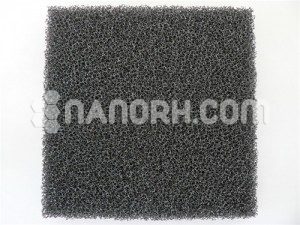
Aluminum Foam is a lightweight, porous metallic material characterized by an interconnected network of pores. Its unique combination of low density, high surface area, thermal conductivity, sound absorption, and corrosion resistance makes it highly valuable across numerous industrial and technological sectors. Due to these properties, open-cell aluminium foam is increasingly used in advanced engineering and energy-efficient applications.
One of the major applications of open-cell aluminium foam is in heat exchangers and thermal management systems. The interconnected pore structure allows efficient airflow and rapid heat dissipation, making it suitable for cooling electronic devices, batteries, LED systems, and automotive components. Industries such as electronics and electric vehicles use aluminium foam to improve thermal performance while reducing overall system weight.
In the automotive and transportation sector, open-cell aluminium foam is widely utilized for lightweight structural components and energy absorption systems. It helps reduce vehicle weight, which improves fuel efficiency and lowers emissions. Additionally, its excellent impact absorption capability makes it useful in crash protection systems, bumpers, and vibration damping components in automobiles, trains, and aerospace structures.
Another important application is in sound absorption and acoustic insulation. The porous structure effectively absorbs sound waves and reduces noise levels in industrial plants, engine compartments, railway systems, and architectural interiors. Open-cell aluminium foam panels are often used in buildings and machinery where noise reduction is essential.
Open-cell aluminium foam is also highly suitable for filtration applications. Its interconnected pores enable the filtration of gases, molten metals, oils, and liquids in industrial processes. It is commonly used in foundries and metallurgical industries for removing impurities from molten aluminium and other metals, improving the quality of cast products.
In the field of energy and environmental engineering, aluminium foam is used in catalyst supports, fuel cells, and battery electrodes because of its large surface area and electrical conductivity. Researchers are also exploring its use in hydrogen storage systems and renewable energy technologies.
Furthermore, open-cell aluminium foam finds applications in medical and biomedical engineering, particularly in orthopedic implants and bone scaffold structures. Its porous architecture can mimic natural bone structure, supporting tissue growth and improving implant integration.
With its multifunctional properties and growing demand for lightweight, energy-efficient materials, open-cell aluminium foam continues to gain importance in modern industrial and scientific applications.