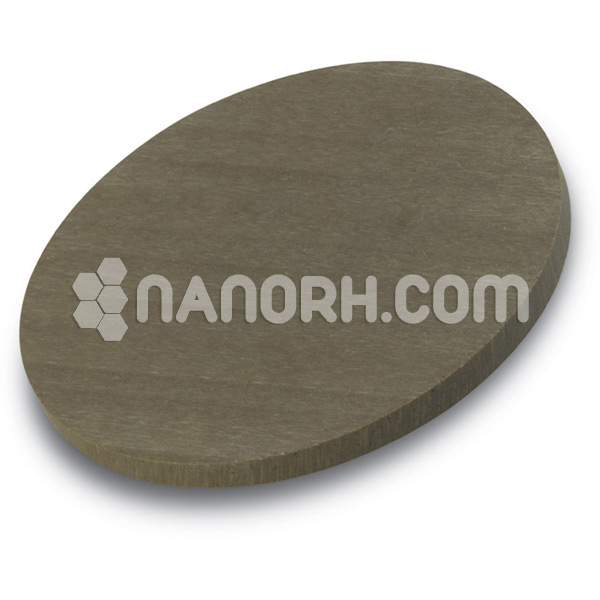
Lithium Lanthanum Zirconate Sputtering Targets
Lithium Lanthanum Zirconate Sputtering Targets
| Lithium Lanthanum Zirconate Sputtering Targets | |
| Product No | NRE-43482 |
| CAS No. | NA |
| Formula | Li7La3Zr2O12 |
| Molecular Weight | 839.74 |
| Purity | >99.9% |
| Density | NA |
| Thickness | 3 mm ± 0.5mm (can be customized) |
| Diameter | 50 mm ± 1mm (can be customized) |
| Shape | Round |
| Resistivity | NA |
| Thermal Conductivity | NA |
Lithium Lanthanum Zirconate Sputtering Targets
Introduction
Lithium Lanthanum Zirconate (LLZO) is a compound that has garnered significant attention in the field of solid-state batteries and advanced materials for electronic applications. Its unique properties, including high ionic conductivity, chemical stability, and compatibility with lithium, make it a promising candidate for solid electrolytes in lithium-ion batteries.
Sputtering Targets made from LLZO are utilized in thin film deposition processes to create high-performance solid electrolyte layers. These layers are crucial for enhancing battery performance, including energy density, safety, and longevity.
Applications
Solid-State Batteries:
LLZO is primarily used in the development of solid-state batteries, where it serves as a solid electrolyte that facilitates lithium ion transport. This technology promises to improve energy density and safety compared to conventional liquid electrolyte batteries.
Thin Film Electronics:
LLZO can be used in the fabrication of thin film transistors and other electronic components, where its insulating and conductive properties are beneficial.
Electrochemical Sensors:
The ionic conductivity of LLZO makes it suitable for use in sensors, particularly those designed to detect gases or other chemicals.
Membranes for Fuel Cells:
LLZO can be employed as a membrane in fuel cells, where its ionic conductivity can enhance the overall efficiency of energy conversion.
Photovoltaic Devices:
In solar energy applications, LLZO can serve as a protective layer or as part of the junction structure in photovoltaic cells.